
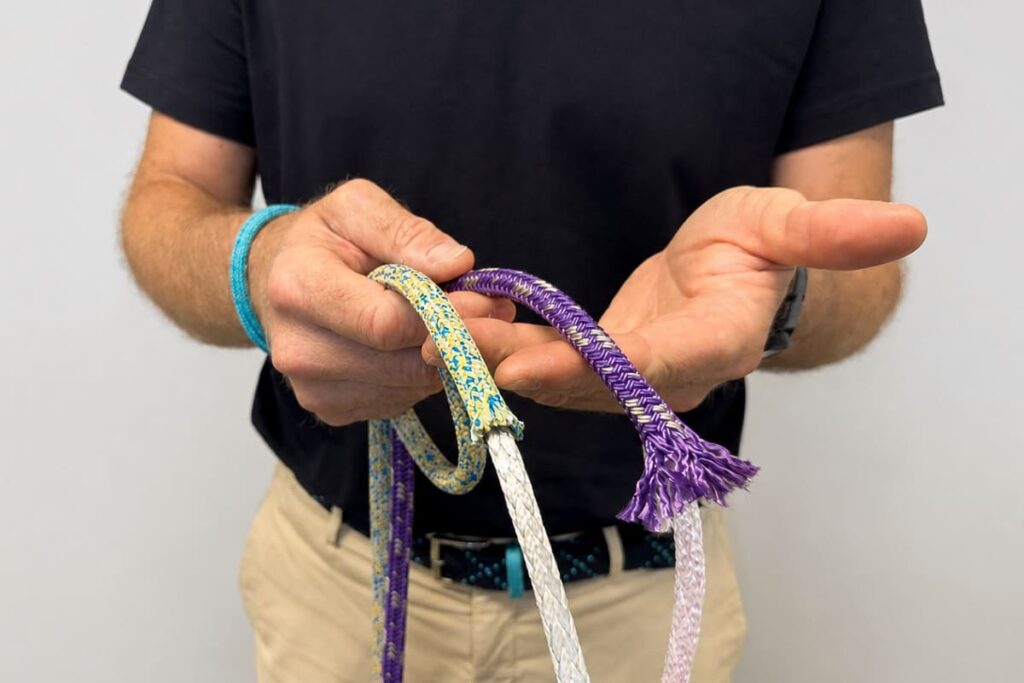
Dyneema® is an excellent material for cruising halyards because it stretches far less than polyester, is lighter and stronger for a given diameter, and offers outstanding long-term durability. The result is more consistent sail shape, less weight and friction aloft, and a reliable rope that can make cruising safer, easier and more comfortable.
Dyneema® is often associated with racing, but its advantages are just as relevant to cruising sailors. A halyard is not simply a line used to hoist a sail: it also helps maintain luff tension and sail shape over time. When the halyard stretches, the sail can lose the trim you carefully set, affecting stability, handling and comfort.
In brief
- Much lower stretch than polyester for more accurate and stable sail trim.
- Lower weight and high strength, allowing smaller diameters and reduced friction.
- Excellent resistance to water, sunlight and chemicals, supporting a long service life.
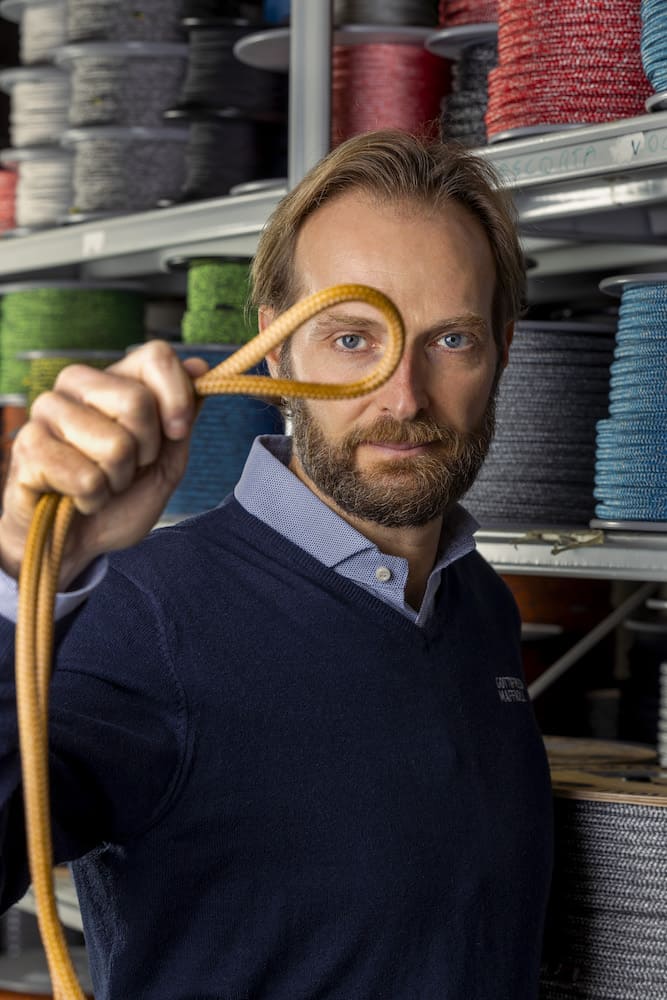
“Many sailors think Dyneema is only worth considering for racing. In reality, cruising sailors often benefit even more from a low-stretch halyard because it keeps the sail stable, makes the boat easier to handle and improves comfort throughout the day. Performance isn’t just about speed, it’s about making every mile under sail more enjoyable.”
Luigi Maffioli, Technical Director, Gottifredi Maffioli
1. Low stretch for more accurate sail trim
The first reason to choose a Dyneema halyard is its very low stretch.
Even when maximum speed is not the priority, accurate sail trim matters on a cruising yacht because it influences stability, safety and overall comfort.
Imagine hoisting and tensioning the mainsail, only to see its shape change after twenty minutes. One likely cause is halyard stretch. Different fibres behave very differently under load. On a 40-foot yacht, a polyester halyard may stretch by roughly 20 to 30 centimetres over its working length, whereas a Dyneema halyard can reduce that movement to around one tenth of the amount, depending on construction, diameter and load.
Lower stretch helps the sail keep the shape you intended. This can improve tacking, reduce unnecessary heeling and make the boat feel more settled. With a gennaker or other free-flying sail, a stable halyard also helps keep the sail easier to control and trim. Even on an older sail, replacing a high-stretch halyard can noticeably improve how the boat behaves.
Why this matters when cruising
- The sail remains closer to the trim set at the winch or clutch.
- A more stable sail can reduce movement, noise and unnecessary heeling.
- More predictable sail shape makes manoeuvres and course changes easier to manage.
2. Lightness: Less weight aloft and easier handling
Dyneema is significantly lighter than polyester and has a much higher strength-to-weight ratio.
Because it is stronger for a given diameter, it may be possible to use a smaller rope while still meeting the required working loads and safety margins.
Reducing diameter and weight can be valuable in two ways. First, less weight aloft contributes to a more efficient rig. Second, a smaller, lighter halyard can run with less friction through sheaves, organisers and clutches, making hoisting and adjustment easier and more comfortable.
The final specification must always match the yacht, sail area, hardware and expected loads. The objective is not simply to choose the smallest possible line, but to achieve the right balance of strength, handling, grip and compatibility with deck equipment.
3. Durability: Long-lasting reliability
The third reason is durability. Dyneema is a robust fibre that ages very well when the rope is correctly designed, installed and maintained. It does not absorb water and offers very good resistance to sunlight and many chemicals, helping the halyard retain dependable performance over time.
For cruising sailors, this durability brings reassurance. A well-specified Dyneema halyard can provide years of service while maintaining the low-stretch characteristics that make it useful in the first place. Although the initial purchase price may be higher than that of a polyester line, the benefits in comfort, trim accuracy, reliability and service life can make it a sound long-term investment.
Maintenance still matters
No rope is maintenance-free. Inspect the cover regularly, especially where the halyard passes through clutches, sheaves and high-friction areas. Look for glazing, flattening, cuts, localised wear or changes in diameter. The condition of the cover is often the clearest indication that the line requires closer inspection or replacement.
When can polyester still be a suitable choice?
Polyester remains a practical material for many applications. It is cost-effective, easy to handle and widely compatible with existing hardware. It may be suitable where loads are moderate, stretch is less critical or budget is the main consideration.
For a primary cruising halyard, however, Dyneema offers clear advantages when the priorities are consistent sail shape, lower weight aloft and long-term performance. The best choice depends on the yacht, the type of sailing and the level of control and comfort required.
How to choose the right Dyneema halyard
Choosing the fibre is only the first step. A complete halyard must be selected as a system, taking into account the core, cover, diameter and compatibility with the yacht’s hardware.
- Working load and safety factor: match the rope to the sail, boat size and expected loads.
- Diameter: ensure correct grip in clutches and comfortable handling on winches.
- Cover construction: choose suitable abrasion resistance and grip for the intended use.
- Hardware condition: check sheaves, exits and organisers for wear or sharp edges.
- Use profile: consider cruising frequency, climate, UV exposure and whether the line is also used for reefing or mast work.
For the best result, ask a qualified rigger or rope specialist to confirm the specification for your yacht and deck hardware.
Frequently asked questions
Is Dyneema suitable for cruising halyards?
Yes. Its low stretch, light weight and durability can improve sail control, comfort and reliability, making it highly suitable for cruising as well as racing.
What is the main difference between Dyneema and polyester halyards?
The main difference is stretch. Polyester elongates more under load, while Dyneema helps maintain more consistent luff tension and sail shape. Dyneema is also lighter and stronger for a given diameter.
Will a Dyneema halyard make my boat faster?
It may improve performance by maintaining a more stable sail shape, but the benefits are not limited to speed. Cruising sailors may also notice easier trim, less heeling and a more predictable, comfortable boat.
Can I use a smaller-diameter Dyneema halyard?
Possibly, because Dyneema has a high strength-to-weight ratio. However, diameter must also suit clutches, winches, sheaves and handling requirements. It should be selected as part of the complete rope and hardware system.
How long does a Dyneema halyard last?
Service life depends on construction, use, UV exposure, chafe and maintenance. Regular inspection of the cover and high-wear areas is essential, even when the core remains strong.
Is Dyneema worth the higher initial cost?
For many cruising yachts, the combination of low stretch, lower weight, easier handling and long-term durability can justify the higher initial price over the rope’s service life.
A practical upgrade for greater comfort and control while cruising
Dyneema halyards are not just for racing yachts. For cruising sailors, they offer three practical benefits: more accurate sail trim thanks to lower stretch, easier handling thanks to reduced weight and diameter, and reliable performance that lasts over time. Together, these advantages help make the boat more stable, easier to handle and more enjoyable to sail.
Gottifredi Maffioli Dyneema® halyards offer an additional advantage: they are all made with BioBased Dyneema®, a fibre produced from bio-based raw materials using the mass balance approach. This helps reduce the product’s carbon footprint while delivering the same outstanding performance, strength and reliability that Dyneema is known for.
If you would like help selecting the most suitable rope construction and diameter for your yacht, our team is ready to help you choose the solution that best matches your needs.


